
Ogilvy / The staying power playbook
The staying power playbook
Nine principles from Confessions of an Advertising Man on keeping a winning campaign running and keeping committees away from the writing, and two worksheets to apply them.
Principle 1 / Staying power
Good campaigns last for years
"Good campaigns can run for many years without losing their selling power" - David Ogilvy
- Ogilvy's own campaigns ran for decades. His eye patch campaign for Hathaway shirts ran for 21 years. His Dove soap campaign had been running for 31 years when he wrote the book, and Dove was the best seller by then. He wrote it in 1963, so this problem is more than sixty years old.
- Consistency and frequency compound. Think about going to the gym for a decade with the same program and the same goal. If the exercises work the right muscle groups for you, you get the outcome you want. A campaign that works behaves the same way, and you keep finding new ways to work the same muscle groups.
Takeaway: Judge a campaign by what it does over years, and let a winner compound.
Principle 2 / Moving parade
Your audience keeps changing
"you are advertising to a moving parade" - David Ogilvy
- The group you are talking to is never the same twice. Ogilvy pointed out that three million consumers get married every year, so the advertisement that sold a refrigerator to last year's couples will probably sell as well to next year's. People enter the market and people leave it, and an advertisement works like a radar sweep that keeps finding the new prospects.
- Your own attention wears out first. You see your advertising far more often than your buyers do, which is why you tire of a campaign long before they do.
Takeaway: Your audience refreshes itself, so a working campaign keeps finding new buyers after you have stopped enjoying it.
Principle 3 / Tired of it
Do not give up a campaign because you are tired of it
"never give up a campaign just because you have grown tired of it" - David Ogilvy
- Replace a campaign when a test beats it. Ogilvy's rule was to switch as soon as you find a campaign that tests better than the one you are running, and to keep the one you have until then.
- The pressure usually comes from inside. Many marketers have received a message from a CEO or CMO asking why a campaign that has run for a month or two is still live, and when the next one is coming out. Executives see the ads over and over, and they start to think about the campaign a competitor just launched, often without knowing how it performed.
- Set it up so a winner keeps running. What I usually do is build an evergreen campaign. I drop the top-performing ads into it and keep some budget going to them, because I know they work. I also exclude my own company and other internal audiences from my ad sets, so the people closest to the work are not the ones seeing the ads most.
Takeaway: Replace a campaign when a test beats it, and keep it running when you are only tired of it.
Principle 4 / Iterate
Keep the idea and change the scene
"a series of situations in which I would have liked to find myself" - David Ogilvy
- Test many ideas first, then commit to the one that works. Hathaway could spend $30,000 against Arrow's $2,000,000. Ogilvy came up with 18 ways to add story appeal, and the eighteenth was an eye patch that he bought for $1.50 on the way to the studio. It was not a shot in the dark, and once he had found something that worked he leaned into it.
- Then put it in new situations. The man with the eye patch conducted the New York Philharmonic, copied a Goya at the Metropolitan Museum, drove a tractor and bought a Renoir. The idea stayed the same and the situation changed.
- Continuity is how it sticks. Insurance companies in the US do this well. Allstate keeps putting Mayhem in new scenarios, and State Farm does the same with Jake. You recognize the brand and you remember it, and both have run for a long time.
Takeaway: Keep the character and the idea fixed, and change the situation.
Principle 5 / Conviction
Hold your style under pressure
"It takes uncommon guts to stick to one style" - David Ogilvy
- The pressure to change arrives every six months. Ogilvy wrote that it is tragically easy to be stampeded into change. Today the pressure comes from the CEO, the CMO, the board, your peers and your competitors, and from whatever is popular on social media that month.
- The brands that held on are still here. He cited Campbell Soup, Ivory Soap, Esso, Betty Crocker and Guinness Stout as advertisers that kept a coherent image over a long period and grew rich as a result. Esso later became Exxon, and the others are still around, which supports his point.
- Ask whether the change is due. The question is whether the campaign has stopped working or is only average. If it is working, you need the conviction to hold your ground and say that you are onto something.
Takeaway: Before you change a campaign, decide whether it stopped working or you stopped enjoying it.
Principle 6 / Long-range
Decide the long-term goal first
"the only instance of an advertising campaign changing the image of a country" - David Ogilvy
- Ogilvy wrote down the goal before the first ad ran. After his agency was appointed for Puerto Rico, he wrote to Ted Moscoso that they had to replace the squalid image many mainlanders held with a lovely one. He tied it to the island's industry, its rum, its tourism and its politics, and he asked what face Puerto Rico should show the world.
- Then he committed to the long term. He proposed a long-range campaign that would present Puerto Rico in an image of renaissance, and it was still running nine years later. He called it the only instance he knew of an advertising campaign changing the image of a country.
- The client's reaction says the rest. After five years, Moscoso said he would phone Ogilvy's other clients and propose that they promise never to fire him if he stopped soliciting new business. That is a strong endorsement of the work and of the approach behind it.
Takeaway: Write down the long-term outcome before the first ad runs, and check that it is possible.
Principle 7 / One person
Great work starts with one person
"a great body of work unless it is led by a formidable individual" - David Ogilvy
- Creative work needs a leader. Ogilvy pointed to the Cavendish Laboratory under Lord Rutherford, The New Yorker under Ross and the Majestic's kitchen under Pitard, the head chef he worked for before advertising. Pitard set an unusually high bar and held strong opinions about the menu, the food and the presentation.
- Today's version is a founder with a point of view. Mark Zuckerberg at Meta, Elon Musk at Tesla and SpaceX, and Sara Blakely at Spanx each have strong opinions and know what they want for their companies. Messaging that comes from one person carries gravitas, and watered-down messaging does not.
- Write alone, with the knowledge behind you. Ogilvy said advertising seems to sell most when a solitary individual writes it. That person studies the product, the research and the precedents, then shuts the door and writes. His best advertisement went through seventeen drafts and built a business. An individual iterates, and a committee deliberates.
Takeaway: Give one person the pen, and give that person time to draft.
Principle 8 / Committees
Committees can criticize and cannot create
"you'll find no statues of committees" - David Ogilvy
- Approval levels pile up. Ogilvy knew an advertiser whose agencies had to clear every campaign through five levels, each with the power to tamper with it or veto it. The cost was unnecessary meetings and a creative atmosphere poisoned by politics, with copywriters learning to collect votes from a dozen different executives.
- Imagined objections dilute the work. His Christian Brothers wine campaign had to please the Seagram team, the monastery's cellarmaster and the head of the order in Rome, and it ended with an order to prepare a campaign without impact. Today, boards, executives, sales and other marketers each weigh in, and people play out what the loudest outlier might think. The one to two percent gets more thought than the majority in the middle, who are going about their day.
- Use a pair, and use the committee for reactions. Ogilvy credited most brand-building campaigns to the partnership of a sure-footed copywriter and an inspiring client, and he put his own work with Moscoso in that group. He wrote that committees can criticize advertisements but should never be allowed to create them.
Takeaway: Let a committee react to the work, and keep it out of the writing.
Principle 9 / Commitment
Go the whole hog
"Whatever you do, go the whole hog." - David Ogilvy
- Keep the message to one or two points. Ogilvy said the most effective commercials are built around one or two points, simply stated, and that a hodgepodge of many points leaves the viewer unmoved. He also wrote that compromise has no place in advertising.
- Ten colors in a circle make brown. Messaging built to please five, ten or twenty people ends up as a mush that lands with no one. It does not stand out and it does not make people feel anything.
- Know when to hold. Working well with others and finding a middle ground is part of the job. Some decisions deserve conviction even when others do not see why, and I hold my ground when I know something will work. The campaigns that keep performing for years usually come from an individual, while committee campaigns check the box and ship.
Takeaway: Pick one or two points and commit to them fully.
Worksheet 1
The keep-or-replace scorecard
Use this when someone wants to replace a campaign that is running. Fill in the details, then answer each check with Y or N and note your evidence. A check with no evidence is research to do before you decide.
- Campaign:
- How long it has run:
- Who wants to change it:
| Check | Y or N | Evidence |
|---|---|---|
| Is it still meeting the goal it was set up to meet? | ||
| Has a replacement tested better than it? | ||
| Are the people who want to change it seeing it more often than your buyers do? | ||
| Have new buyers entered the audience since it launched? | ||
| Is the idea still clear, even if the execution has been repeated? | ||
| Could the idea stay and the situation change? | ||
| Are the top ads in an evergreen campaign with budget that stays funded? | ||
| Is your own company excluded from the ad sets? | ||
| Is the case for changing it based on results, and not on a competitor's launch or on being tired of it? |
Decision rule
- Keep it running: it still meets its goal and no test has beaten it.
- Iterate: it still meets its goal, and the audience has seen the same scene for a long time. Keep the idea and change the situation.
- Replace: a test has beaten it, or it has stopped meeting its goal.
Worksheet 2
The approval and draft audit
Use this on a piece of work that has been through review. List each person or group who saw it, in the order they saw it.
| Level | Who | Can comment or can veto | What they changed | Did it make the work better? |
|---|---|---|---|---|
| 1 | ||||
| 2 | ||||
| 3 | ||||
| 4 | ||||
| 5 |
Draft checklist
- One named person wrote it
- That person studied the product, the research and earlier examples first
- They drafted it more than once before anyone else saw it
- Reviewers were asked to react to a finished draft, and not to write parts of it
- The piece makes one or two points
- You can name the changes you accepted and the ones you held on, and why
Applied today
- 1. The evergreen campaign (Principle 3). When a campaign finds its footing, I put the top-performing ads into an evergreen campaign and keep some budget going to them at all times. I run the iteration separately, so the winners keep running while I test variations of them.
- 2. Excluding your own company (Principle 3). Employees, executives and other internal audiences see your ads more than your buyers do, which is how a campaign starts to feel overused inside the company. Excluding your company from your own ad sets keeps them from being retargeted with your own ads.
- 3. Mayhem and Jake (Principle 4). Allstate with Mayhem and State Farm with Jake keep one recognizable character and change the situation each time. The brand stays continuous, and the work stays fresh enough to hold attention.
Keep the conversation going
Keep what works running, and keep the writing with one person.
- Back to the Episode 3 page
- Episode 2 and its playbook
- Episode 1 and its playbook
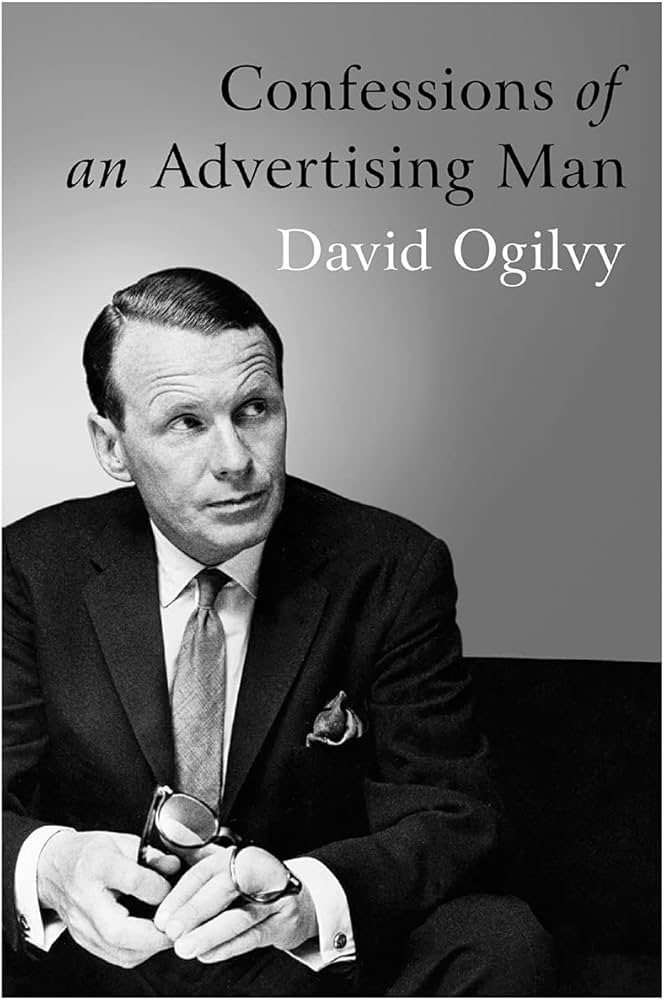
Book: Confessions of an Advertising Man by David Ogilvy: Amazon
Marketing Meditations is made at Dereva.